A Guide to Its Energy and Influence
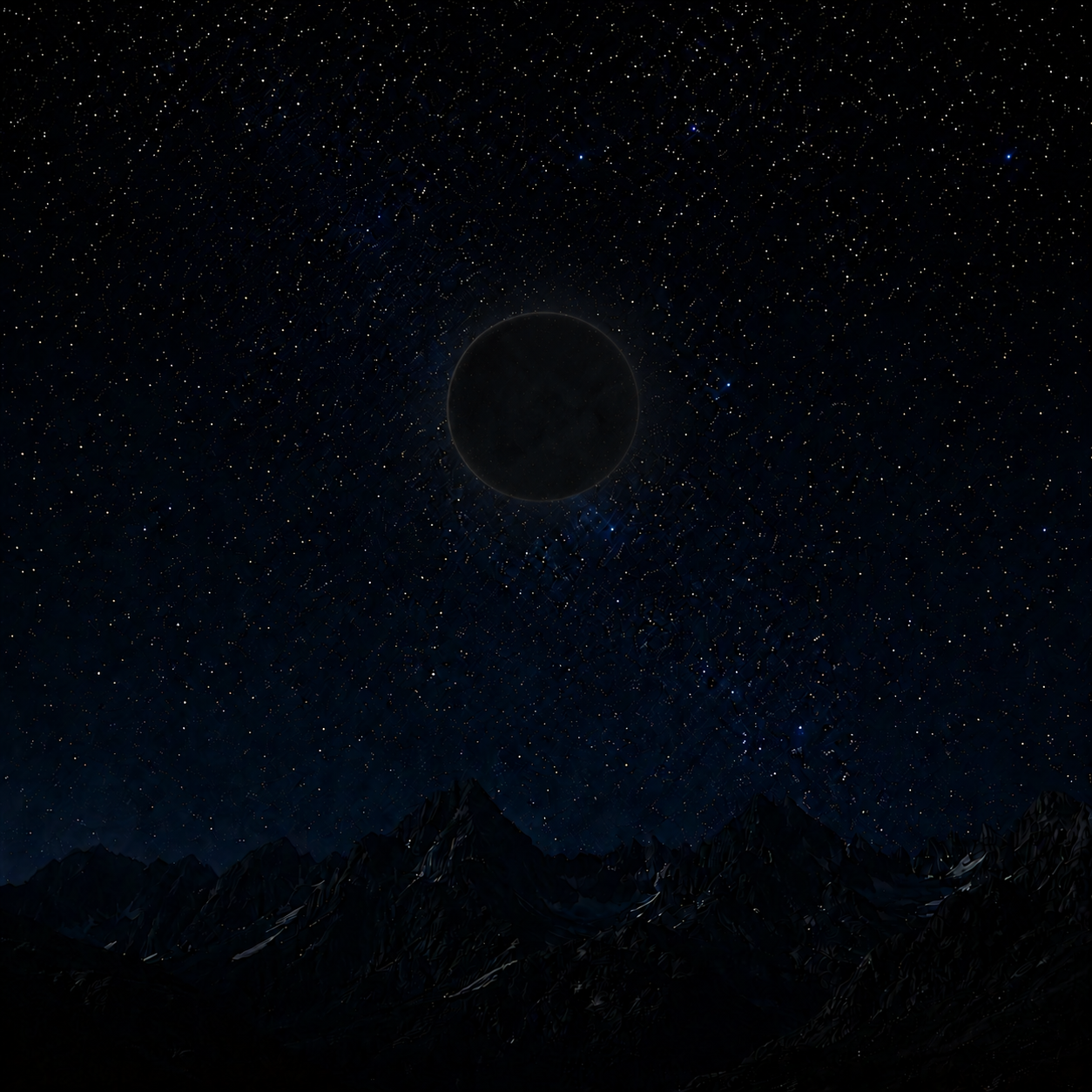
The new moon is the phase when the moon sits between the Earth and the sun, so its sunlit side faces away from us. From Earth the moon appears to vanish — and for one brief window each month, the night sky is at its darkest and most star-filled.
December 9, 2026
in 20 days
12:52 AM your time
How a new moon forms
A new moon occurs when the moon and sun share the same ecliptic longitude as seen from Earth — in plain terms, the moon is positioned between us and the sun. The hemisphere of the moon that catches sunlight is the far side, the side we never see, so the near side is dark and the moon effectively disappears from the sky.
Because the moon's orbit is tilted about five degrees relative to Earth's path around the sun, the moon usually passes just above or below the sun at this stage, and we get an ordinary new moon. When the alignment is exact, the moon's silhouette crosses the sun's face and we see a solar eclipse — one of the most striking events in astronomy.
The new moon marks the start of the lunar cycle. From this invisible beginning, a thin crescent of sunlight begins to creep across the moon's near side over the following evenings, growing into first quarter, gibbous, and eventually the full moon roughly two weeks later.
What the new moon means in practice
For anyone who loves the night sky, the new moon is the most important date on the calendar. Without moonlight washing out the heavens, faint objects become visible: the band of the Milky Way, distant star clusters, nebulae, and galaxies that are normally drowned out by lunar glare.
This is why astronomers, astrophotographers, and stargazing clubs plan their deep-sky sessions around the nights surrounding the new moon. A clear, moonless night far from city lights can reveal thousands of stars and the soft glow of our galaxy arching overhead — a view that is simply impossible during the bright weeks around the full moon.
The new moon also resets the tidal cycle. Because the sun and moon pull together from the same side of Earth, tides around the new moon are spring tides — the same amplified high and low tides that occur at full moon.
- The moon is essentially invisible for 1–2 nights around the exact new moon, making these the darkest nights of the month.
- A thin waxing crescent usually becomes visible the evening after the new moon, low in the western twilight shortly after sunset.
- Solar eclipses can only happen at the new moon, when the moon's shadow falls on Earth.
Observing and photographing around the new moon
The new moon itself gives you nothing to photograph on the moon, but it opens up everything else. Use these nights for wide-field astrophotography: the Milky Way, constellations, meteor showers, and airglow. A sturdy tripod, a fast wide-angle lens (f/2.8 or faster), and a high ISO let you collect enough light to reveal the structure of our galaxy.
If you want to catch the moon itself, wait a day or two after the new moon and look low in the west just after sunset. The young waxing crescent is delicate and earthshine — sunlight reflected off Earth that faintly lights the moon's dark portion — can sometimes be seen illuminating the rest of the disc. A low horizon, clear weather, and timing within about 30 minutes of sunset are essential.
Cultural meaning of the new moon
Across many cultures the new moon represents beginnings, planting, and intention-setting. Lunar calendars — including the Islamic, Hebrew, and Hindu calendars — begin each month at the new moon, and major observances such as Ramadan, Rosh Hashanah, and Diwali are timed to its appearance.
The first sighting of the thin crescent after the new moon has historically been a moment of celebration and ritual. Because the crescent is so faint and low, spotting it requires a clear western horizon and good conditions, which is why traditional moon-sighting relied on direct visual observation.
Explore related moon tools
A solar eclipse can only happen at the new moon, when the moon’s shadow falls on Earth. See upcoming events in our Solar & Lunar Eclipse Calendar, and track every phase of the cycle with our moon phase calendar.
Frequently Asked Questions
Can you see the new moon?+
Not directly. The new moon's lit side faces away from Earth, so it blends into the sun's glare and is invisible. You can sometimes see the dark disc silhouetted against the sun during a solar eclipse, but otherwise the new moon is observed by the absence of moonlight in the night sky.
Why is the new moon good for stargazing?+
With no moonlight competing, the sky reaches its darkest natural state. Faint stars, the Milky Way, nebulae, and galaxies all become visible, which is why astronomers schedule deep-sky observing around the new moon.
How is the new moon different from a solar eclipse?+
A new moon happens every month. A solar eclipse is a special new moon where the moon passes exactly in front of the sun from Earth's perspective, casting a shadow on us. The moon's tilted orbit means this precise alignment is rare.
When can I see the moon again after the new moon?+
Usually the evening after the new moon, look low in the western sky just after sunset. A thin waxing crescent becomes visible there as the moon moves east of the sun in our sky.
Keep exploring the moon